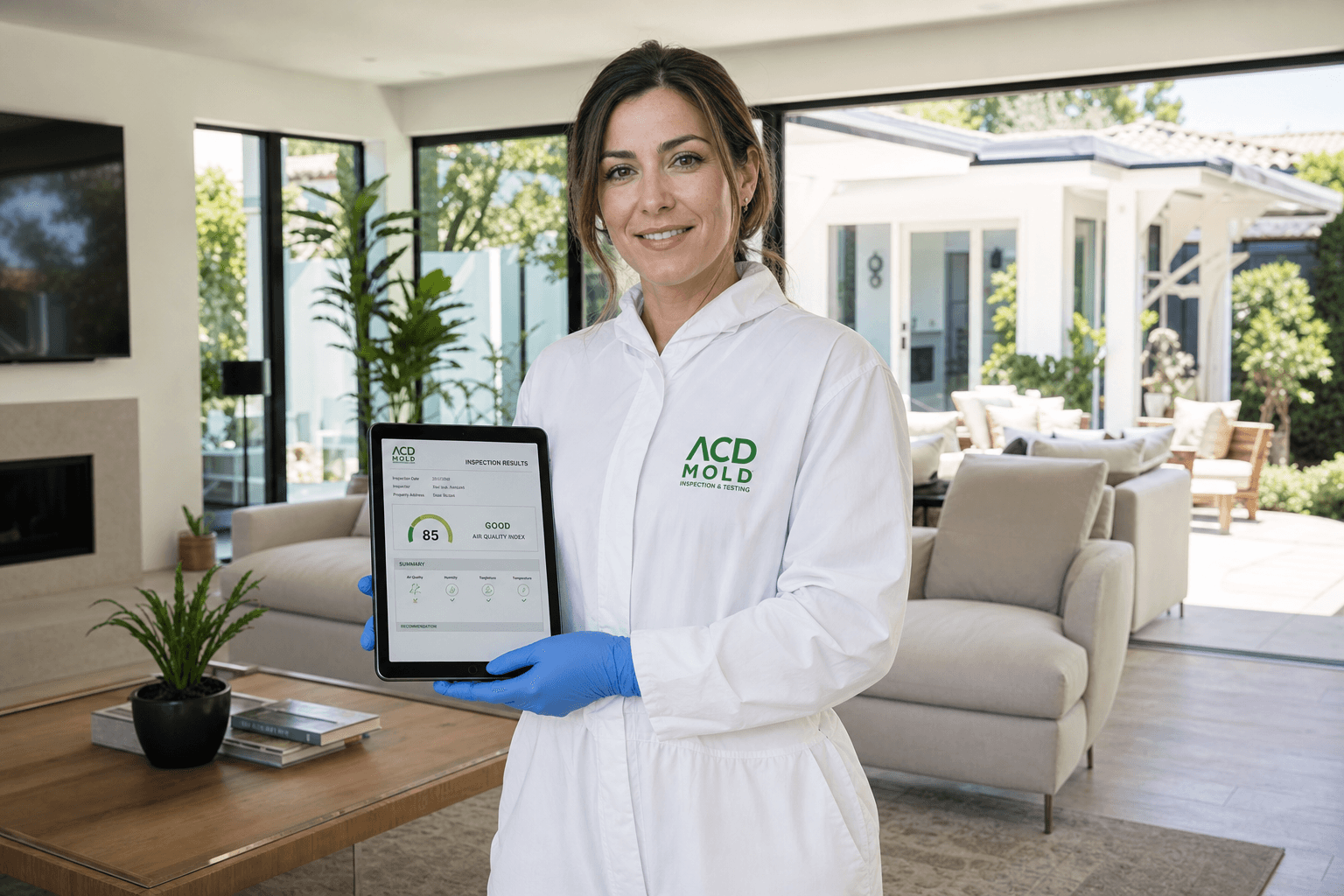
A mold inspection in Sherman Oaks comes down to one question: where is water getting in, and is mold growing because of it? ACD Mold is an independent inspection and testing company. We diagnose the problem and, when lab analysis is warranted, send samples to an AIHA-accredited laboratory. We do not sell the removal work, which is exactly what keeps our findings honest. Whether you are in a hillside home above Ventura Boulevard, a mid-century ranch in Chandler Estates, or a condo where a neighbor's leak may be reaching your walls, the goal is a clear, source-focused answer.
What a mold inspection covers here, and how it differs from testing
An inspection is a trained visual and instrument-based assessment of your home. An inspector looks for visible growth, staining, and musty odor, then uses thermal imaging and moisture meters to trace where water is actually sitting inside walls, ceilings, subfloors, and cabinetry. The point is to locate the moisture source, because mold is a symptom of a water problem, not the root cause. Fix the water and you remove the reason the mold came back.
Testing is a separate, optional step: taking surface or air samples and having an accredited lab identify and count the spore types present. It does not replace an inspection and is not always needed. As the U.S. EPA notes, when mold is already visible, sampling is usually unnecessary, because the recommended action, removing the mold and fixing the moisture, is the same regardless of what a lab report says. We tell you plainly when sampling adds real information and when it would just add cost.
Why Sherman Oaks homes develop hidden moisture
The San Fernando Valley is hotter and drier than the Los Angeles coast, so mold here is usually driven less by ambient humidity and more by specific water intrusion: plumbing leaks, roof and window flashing failures, slab moisture, and condensation on undersized or poorly sealed HVAC systems. That changes where an inspector looks first.
Three characteristics of the local housing stock and terrain are worth an inspector's early attention:
- Hillside homes in the Sherman Oaks Hills can take on slope seepage, where groundwater moves downhill and pushes against lower-level walls, foundations, and garages after the rainy season.
- Mid-century ranch homes, common throughout the flats and Chandler Estates, often still have aging cast-iron drain lines that corrode and weep behind walls and under slabs long before anyone sees a stain.
- Dense Ventura Boulevard condos frequently share HVAC, plumbing, and wall assemblies between units, so a leak or musty odor can originate in a neighboring unit and travel into yours, which makes locating the true source more involved.
What to expect at the appointment
A standard residential inspection is non-invasive. The inspector walks the property with you, documents problem areas, and then works through the suspected zones with instruments. A thermal (FLIR) camera reveals temperature differentials that often correspond to wet or cold spots behind finishes. Moisture meters confirm whether those areas are actually damp or simply cool. Where a closer look is justified, a borescope can inspect a wall cavity through a small, discreet opening rather than opening up the wall.
It helps to understand what these tools can and cannot do. A thermal camera does not see mold through a wall; it maps surface temperature, which an inspector interprets alongside moisture readings to decide where water is likely collecting. Most standard residential inspections take roughly one to two hours depending on the home. You receive a documented summary of findings and prioritized recommendations.
Honest pricing and timing
A standard residential thermal and moisture inspection in Sherman Oaks runs $295 to $595, depending primarily on the size of the home and the number of areas of concern. That fee covers the on-site assessment, instrument readings, and your findings summary.
If laboratory testing is warranted, it is priced as an add-on: approximately $95 per surface sample, or $145 to $195 per air sample. Air samples are collected on spore-trap cassettes drawn at about 15 liters per minute and analyzed under microscope at an AIHA-accredited lab, which compares the indoor result against an outdoor baseline taken the same day. Lab results typically return within a few business days. We will recommend sampling only where it answers a real question, so most inspections do not require it.
When testing is, and is not, needed
There are no federal or EPA limits for airborne mold or spore counts, and no health-based spore threshold that defines a home as safe or unsafe. What testing does is characterize the specific sample taken at that time and place and compare indoor spore levels to an outdoor baseline. It does not diagnose illness and it cannot certify a building as safe.
The California Department of Public Health recommends promptly removing all visible mold and fixing the moisture source; it uses no size threshold and advises against routine measuring. The EPA separately offers do-it-yourself guidance that a patch smaller than about 10 square feet can often be cleaned by a homeowner taking proper precautions; that figure is DIY guidance, not a California rule or legal trigger. The CDC notes that any indoor mold should be removed regardless of species, that so-called black mold is not a distinct diagnosis, and that a causal link between Stachybotrys and serious illness in otherwise-healthy people has not been established. People with asthma, mold allergies, or weakened immune systems may react more strongly, which is a sensible reason to act promptly rather than panic.
If removal is needed: licensed partners and independent clearance
ACD Mold performs inspection, testing, and clearance; we do not perform the physical removal. That is deliberate. The party diagnosing the problem and verifying the fix should not be the party paid to do the removal, because that separation is what keeps the verification credible.
When removal is warranted, you have two paths. We can coordinate licensed, insured remediation partner crews, or you can use your own remediation contractor. California has no state mold-specific license; remediation is performed under a CSLB contractor license, commonly a B general or a C-61/D-64 classification, held by the crew doing the work. Once the work is complete, we return as an independent party to verify it through post-remediation clearance: a visual check for any remaining growth plus air sampling confirming spore counts are at or below the outdoor baseline. Only then is the area considered cleared for reoccupancy.
A clear next step
If you have a musty smell, a past or active leak, a recent water event, visible staining, or a condo neighbor's water problem that may be reaching you, an inspection gives you an objective read before you spend money on removal you may not need. ACD Mold is based in Encino and travels to clients throughout Sherman Oaks and the San Fernando Valley; there is no storefront in other cities. Call (424) 352-7039 to schedule an inspection and get a straight answer about what, if anything, needs to be done.
Authoritative Sources Referenced
ACD Mold's inspection and testing protocols — and the remediation partners we coordinate — follow the published guidance of the recognized authorities below. Click through to verify any statement on this page:
- U.S. Environmental Protection Agency — Mold
- Centers for Disease Control and Prevention — Mold
- IICRC S520 Standard for Professional Mold Remediation
- American Industrial Hygiene Association (AIHA) Laboratory Accreditation Programs
- California Department of Public Health — Indoor Air Quality
- OSHA — Mold Health Hazards